The sun always wins — eventually
Your Roof Is in a Fight With the Mojave Sky
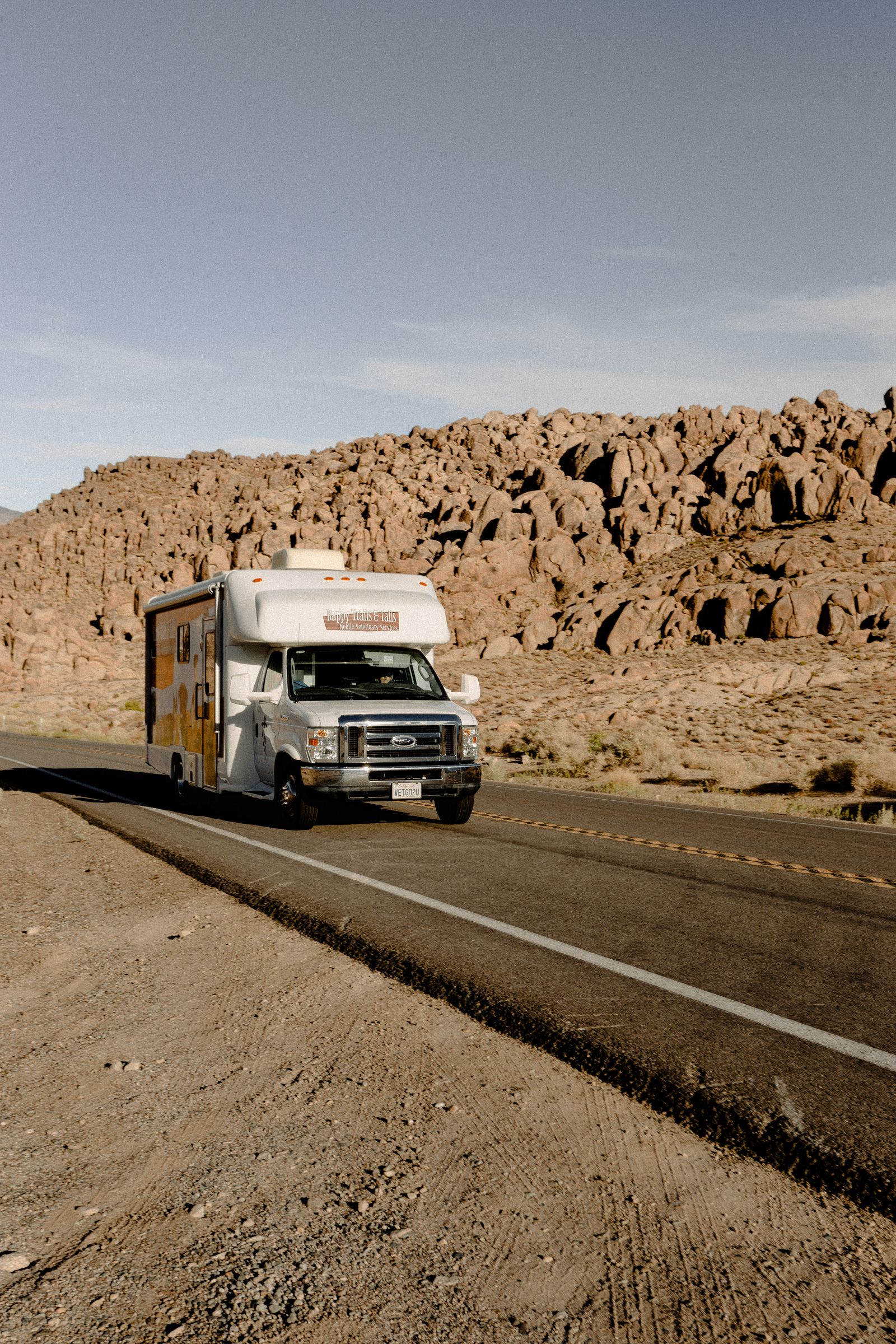
Nothing on an RV ages faster in Pahrump than the roof. The math is simple and merciless: close to Death-Valley-grade UV nearly year-round, roof surface temperatures far above air temperature all summer, bone-dry air that pulls the flexibility out of sealants, and spring winds that flex every seam and drive grit into every crack. Lap sealant that might last years in a gentler climate turns chalky and split here on a much shorter clock.
The reason this matters is what's underneath. A roof leak doesn't announce itself until water has already traveled — into the ceiling, down a wall cavity, into the framing. By the time you see a brown stain, the cheap repair window closed months ago. Roof work in this valley is less about fixing leaks than about never letting them start.
Service list
Roof Work Done on Your Pad
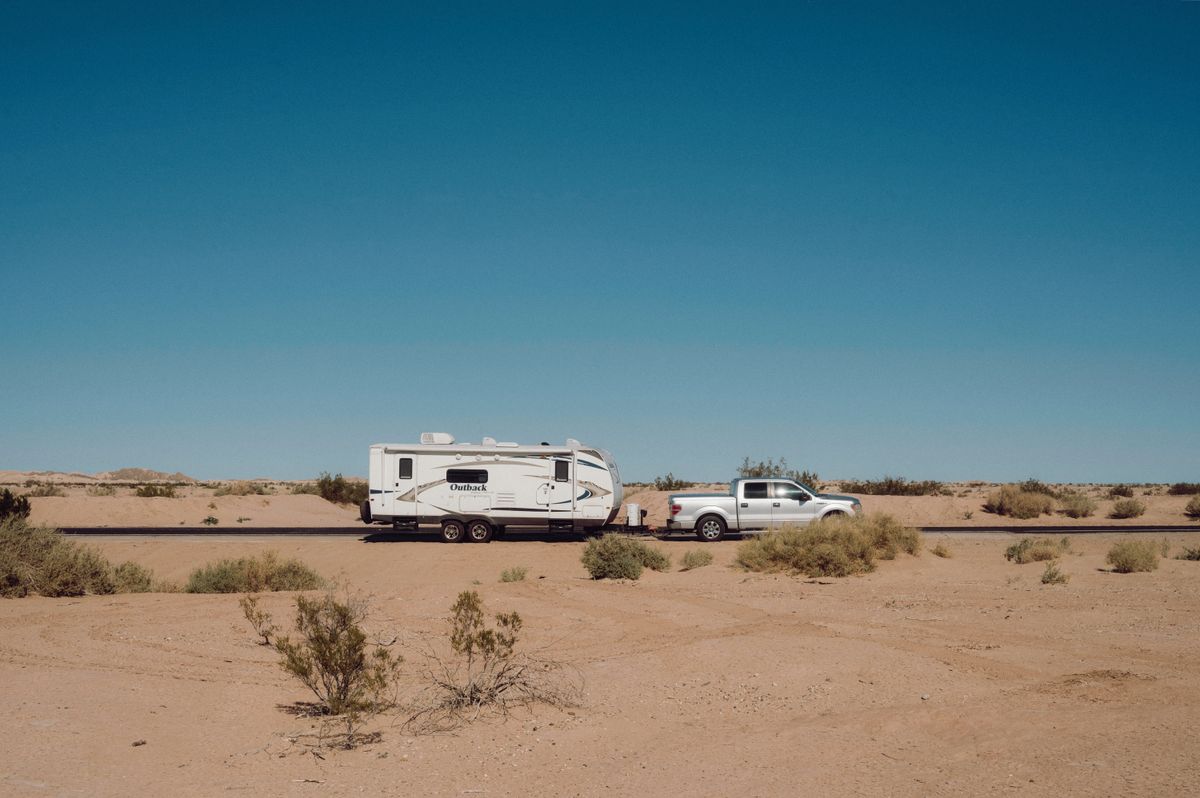
- Full roof inspections. Every seam, every penetration — vents, skylights, AC gaskets, ladder mounts, antenna bases — checked and photographed so you see exactly what the technician sees.
- Lap sealant renewal. Old, split dicor stripped or bridged correctly and recoated with sealant matched to your roof material. This is the single highest-value maintenance dollar in desert RV ownership.
- Membrane patches and section repairs. Punctures from branches and hail, tears at seams, bubbling and delamination on EPDM and TPO membranes — patched with proper materials, not a tube of whatever was in the bin.
- Full resealing and coating systems. When a roof is sound but its surface is spent, a professionally applied coating system can add years — honest assessment first, because coating a failing roof is money burned.
- Vent, fan, and skylight replacement. Sun-crazed vent lids and yellowed skylights replaced before they crack in the next wind event; powered fan upgrades while the opening is already unsealed.
- Storm and wind damage. After a spring blow rips a vent cover off or peels sealant at a leading edge, fast tarping and permanent repair — at your site, before the next front arrives.
The desert schedule
How Often Should a Pahrump Roof Be Checked?
Twice a year, and that's not upsell — it's arithmetic. Sealant in this sun degrades continuously, and the cost curve of water damage is a hockey stick: a tube of sealant and an hour of labor on one side, soft ceiling framing and delaminated walls on the other. The natural rhythm for snowbirds is once when you arrive in fall — after your rig summered somewhere, possibly baking in storage — and once before you leave in spring. Full-timers and year-rounders should think spring and fall regardless. If your rig sits in Pahrump storage over the summer, the fall check is the one you must not skip; one Mojave summer does more sealant damage than several years somewhere kinder.
Seeing water inside already? Mark the spot, photograph it, and note the weather when it appeared — leaks travel, and the entry point is often several feet from the stain. Then get an inspection scheduled promptly. Interior evidence means the leak has a head start measured in months.
Materials matter
Rubber, Fiberglass, and Everything In Between
EPDM rubber, TPO, fiberglass, and aluminum roofs each fail differently and demand different products — the wrong sealant on the wrong membrane can make a repair worse than the leak. Desert UV is also hardest on the white membrane surfaces that dominate modern rigs, chalking them season by season. The technician identifies your roof type before quoting materials, uses compatible sealants and primers, and will tell you plainly when a roof has reached the stage where patching is throwing good money after bad. That last conversation is rare — but when it's needed, you want it before you spend, not after.
Paper trail included
What a Photo-Documented Inspection Gives You
A proper roof inspection produces more than a verbal "looks okay." You get photographs of every seam and penetration, close-ups of anything marginal, and a plain-language summary of what needs attention now, what bears watching, and what's healthy. That record earns its keep three ways. It gives you a baseline, so next season's inspection can show change instead of guesswork. It gives you evidence, if a storm claim or a warranty conversation ever needs proof of the roof's prior condition. And it gives you honesty insurance: when the recommendation is "spend nothing this year," you can see why with your own eyes, and when the recommendation is a reseal, you can see exactly which seams earned it. Owners who can't climb their own ladders anymore — a fair share of this valley's RV population — tell us the photos alone are worth the visit.
Coverage
Roof Calls Across the Valley
Roof and reseal work happens at every RV resort in Pahrump, on private acreage, in storage yards, and along the corridor toward Death Valley. All the job needs is your rig, safe roof access, and a day without high wind — which the scheduling call plans around. Storage-yard rigs deserve a special mention: a roof that spent the summer unattended in a Pahrump yard should be inspected before the rig goes back into service, because sealant failures in storage go unnoticed the longest and cost the most by the time anyone climbs up.
Quick answers
RV Roof FAQs
My sealant looks cracked but nothing leaks. Do I wait?
No — cracked sealant is a leak with a countdown attached, and in this climate the countdown is short. Resealing over sound structure is the cheap version of this repair. Waiting for the stain converts it into the expensive version.
Can I just coat the whole roof with sealant tape or RV roof coating myself?
DIY products have their place, and a handy owner can maintain a healthy roof. Where DIY goes wrong: incompatible products on membranes, coating over trapped moisture, and bridging seams that needed real repair first. If you want to DIY, an inspection first tells you whether your roof is a good candidate — that's a legitimate use of a service call.
How long does a full reseal take at my site?
A straightforward penetration-and-seam reseal is typically a same-day job at your pad. Full coating systems need surface prep and cure time, so plan on longer and on a stretch of calm, dry weather — rarely a scheduling problem in this valley.
Does hail or wind damage go through insurance?
Storm damage is often claimable on RV policies, and insurers generally accept independent repair documentation. Photograph everything before any temporary fix, save the estimate paperwork, and check your policy's process. The technician can provide the written diagnosis and photos adjusters ask for.
My roof is white but chalky — my hand comes away powdered. Bad?
That's UV oxidation of the membrane surface — normal aging, accelerated here. Light chalking is cosmetic; heavy chalking means the membrane is thinning and it's time to talk protective coating while the roof underneath is still worth protecting.
Seal It Before the Desert Finds a Way In
Inspections, reseals, and repairs at your site — get the free phone quote before the next wind event.