The Death Valley corridor
RV Service Where the Map Starts Emptying Out
North and west of Pahrump, the valley gives way to the long, beautiful, empty stretch that funnels travelers toward Death Valley National Park: Amargosa Valley at the US-95 junction, the SR-373 run down to Death Valley Junction, and Beatty — the classic gateway town perched an hour up the highway. It's spectacular country with very few service options, which is exactly why a Pahrump-based mobile RV technician runs this corridor.
If your rig is parked at a corridor RV park, or something quit while you were staging for the park — or limping back out of it — you don't have to nurse the problem all the way to Las Vegas. The truck comes north.
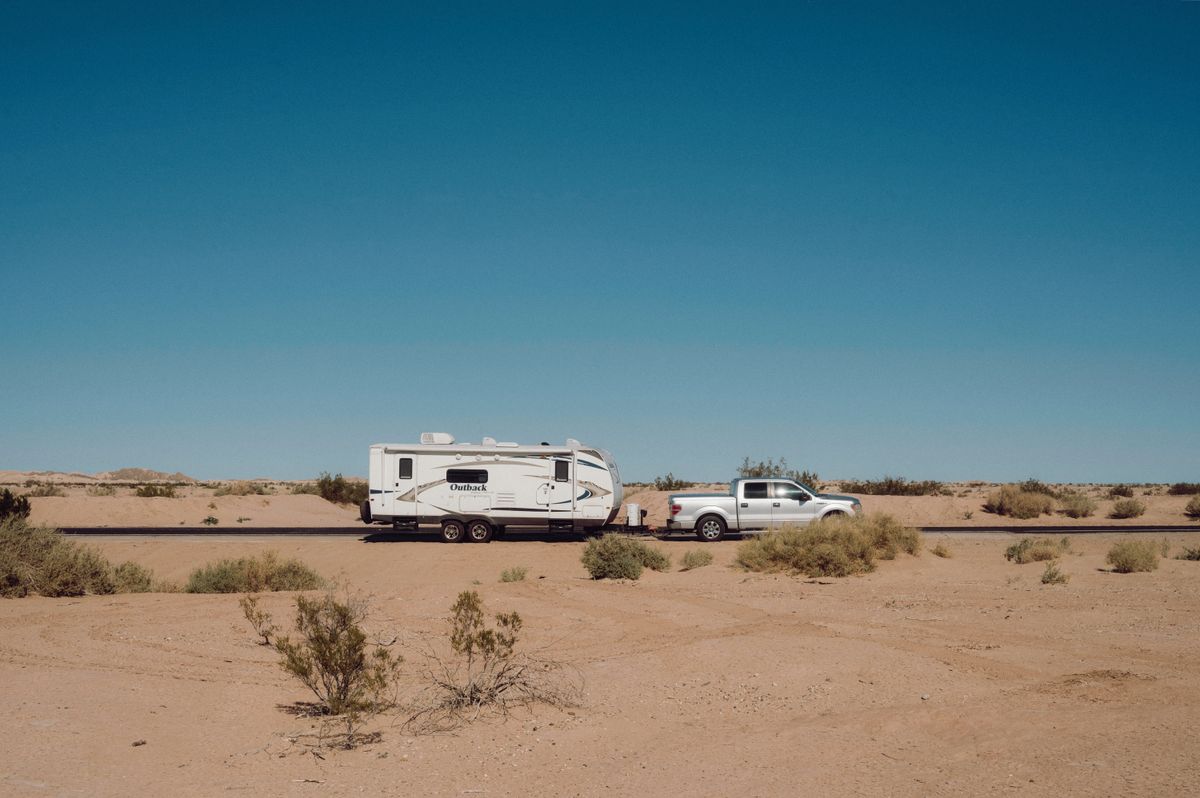
Where the truck goes
Corridor Stops We Serve
- Amargosa Valley — the crossroads community where NV-160 country meets US-95, including the RV parking clustered near the junction and the farms and worker housing scattered through the valley.
- Longstreet Inn, Casino & RV Resort — the oasis-style stop on SR-373 near the California line, a few minutes from Death Valley Junction. A popular staging park for the national park's eastern entrance, and a regular service destination.
- Death Valley Junction approaches — rigs on the Nevada side of the line staging for the CA-190 run into the park.
- Beatty — the gateway town on US-95, including Space Station RV Park, the Death Valley Inn & RV Park, and Beatty RV Park north of town. About an hour from Pahrump, scheduled as dedicated trips.
- The road between — sometimes the location is "mile marker and a description." Breakdown spots along US-95 and SR-373 with safe shoulder access are workable; send GPS coordinates and stay with the rig.
Why this corridor bites
Death Valley Punishes Unready Rigs
The corridor's traffic is heavily seasonal and heavily loaded: rigs pulling grades in serious heat, air conditioners and refrigerators working at their limits, and long stretches with no hookups, no shade, and thin cell coverage. The park itself is famously hard on cooling systems — and the trip back out is where marginal components finally quit. The most common corridor calls are absorption fridges that gave up in the heat, rooftop ACs that faded on the climb, and battery systems that didn't survive a week of dry camping. All are fixable at a corridor park — and most are preventable with a checkup before you go in.
Staging for Death Valley? Book a pre-trip once-over while you're still parked in Pahrump or at Longstreet: fridge health, battery capacity, tire-pressure sanity check, and a look at the cooling system's electrical side. An hour of prevention beats a very long, very hot afternoon on SR-373 — cell service in the park itself is scarce to nonexistent.
The high gateway
Beatty Runs on Its Own Thermostat
Beatty sits near 3,300 feet in the Amargosa Desert, noticeably higher and cooler than the valley floor below, with day-night temperature swings that can span thirty degrees. That's pleasant for sleeping and sneaky for equipment: furnaces get real workouts on spring and fall nights that started as shorts weather, water hoses meet surprise freezes earlier than Pahrump's, and propane appliances that were tuned at lower elevations sometimes burn differently up here. The town's parks host an unusual mix — Death Valley tourists on two-night stays, long-term workers, and wanderers who came for a week years ago — and the service calls mirror it: quick get-me-rolling repairs for travelers alongside deferred-maintenance lists on resident rigs. Both are welcome on the schedule.
Carry list
What Smart Rigs Carry on This Corridor
- Water beyond your plans. The corridor's services are far apart and the country between them is genuinely hot most of the year.
- A tire kit and a real gauge. Blowouts are the corridor's number-one stopper, and tire work is tow-truck territory — prevention is your department.
- Printed or downloaded maps. Cell coverage fades between towns and inside the park; a dead phone shouldn't strand your navigation.
- Our number, saved before you leave signal. The best time to find a mobile tech's number is not while standing on a shoulder waving your phone at the sky.
Logistics, honestly
Distance, Trip Fees, and Straight Answers
Corridor service is real service, but geography is geography: Amargosa Valley runs about forty minutes from Pahrump and Beatty about an hour, so calls north of town carry a distance component in the service fee and get grouped sensibly — a Beatty run may be scheduled around other corridor work to keep your cost down. You'll hear the honest numbers on the free phone quote before anything is booked. What you won't hear: a Vegas-style dispatch fee for a metro tech who treats Beatty like the far side of the moon. This corridor is part of the home territory.
Timing helps costs too. If your problem can wait a day or two, saying so lets a corridor run be bundled with other northbound work, trimming the distance charge for everyone on the route. If it can't wait — spoiling food, no cooling, a rig stranded mid-trip — say that instead, and the schedule bends the other way. Either answer is fine; the quote just needs the truth to price it fairly.
Quick answers
Corridor Service FAQs
Can you come into Death Valley National Park itself?
Park-interior calls are case-by-case: it's a long unsupported run, cell coverage inside is minimal, and some situations there are better served by towing or park concessioner resources. Call from the first signal you get — Beatty or Amargosa Valley side — and you'll get an honest read on whether a mobile visit or another option serves you better.
My fridge died mid-trip at a corridor park. How fast can someone come?
Corridor calls are scheduled as dedicated trips, so same-day depends on the day's calendar — but food-spoilage and no-cooling situations get first claim on it. Call early in the day, describe the rig and symptoms, and ice the essentials; you'll get a realistic window, not a fantasy one.
Is there any RV repair based in Beatty or Amargosa Valley?
These are small communities without dedicated RV service infrastructure — that's precisely why the corridor is part of this service area. Your realistic options are a mobile run from Pahrump or a very long tow. The phone quote will tell you plainly which makes sense for your problem.
What should I have ready when I call from the corridor?
Location first: park name and space, or GPS coordinates and the nearest mile marker. Then the rig type, what failed, and what you've tried. If cell signal is weak, a text with photos often gets through where a call drops — and it gives the technician a head start on parts.
Do you serve the corridor year-round?
Yes. Winter and shoulder seasons bring the tourist wave, but Amargosa Valley and Beatty have year-round residents and workers with rigs that don't stop needing repairs in summer. Summer corridor calls simply get planned around the heat — early starts, for everyone's sake.
Help That Drives North
Amargosa Valley, Longstreet, Beatty, or a shoulder on US-95 — call with your location and get a straight answer.