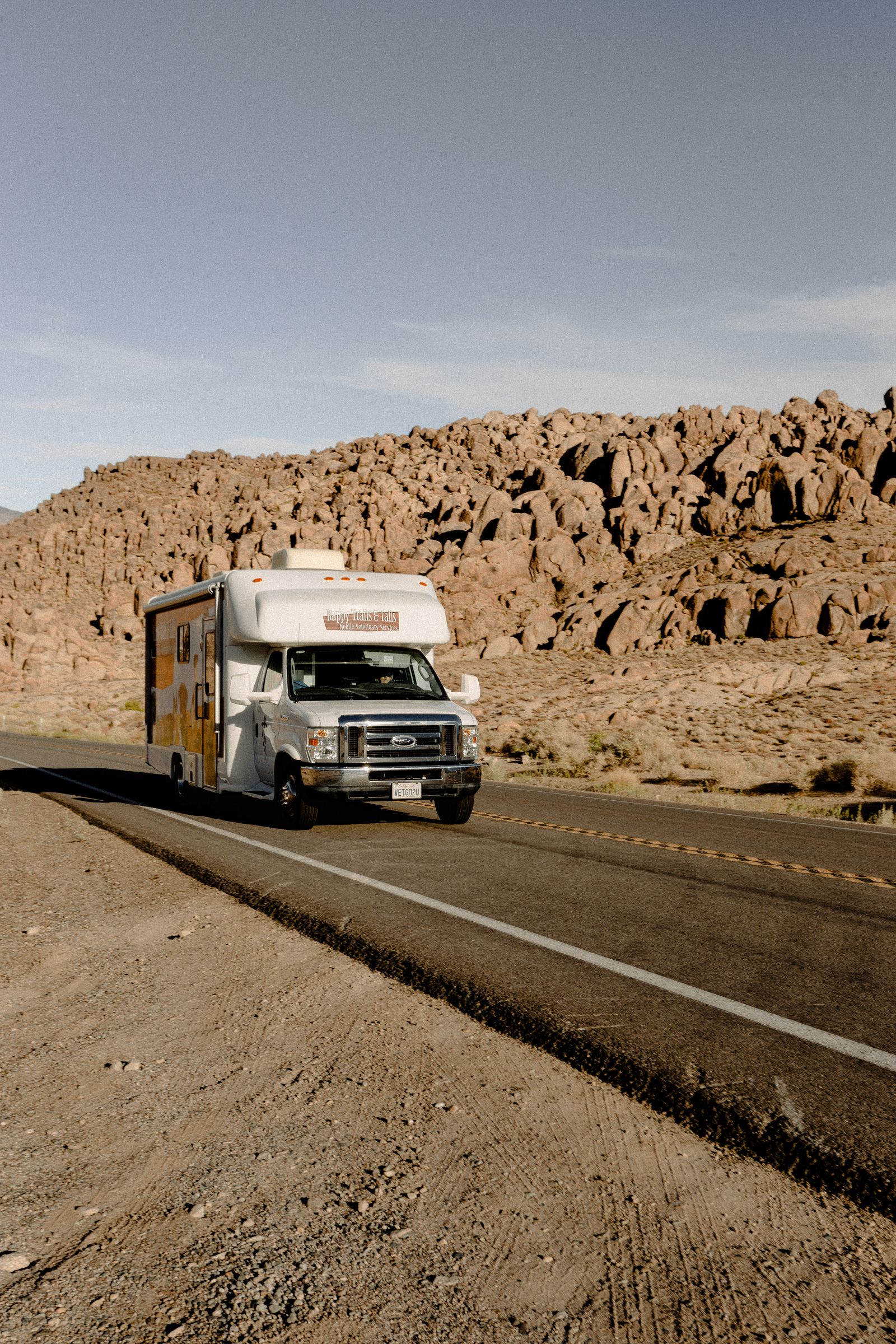
Cooling is survival gear here
The Mojave Doesn't Negotiate With Rooftop Units
Pahrump sits at about 2,700 feet in the northern Mojave, and its summers routinely push past 110°F. A rooftop RV air conditioner up there is a small sealed machine strapped to a hot roof, pulling triple duty for months — and it ages accordingly. The parts that fail first aren't exotic: capacitors that cook, fan motors that dry out, compressors that start hard and then stop starting at all. Most of them can be swapped on your roof in a single visit.
Before you resign yourself to buying a whole new unit or dragging your rig to a Las Vegas service bay, describe the symptoms over the phone. A surprising share of "dead" RV air conditioners are one inexpensive component away from cold air.
Failure lineup
What Kills RV Air Conditioners in Pahrump
- Cooked capacitors. The desert's signature kill. Symptoms: humming, clicking, a fan that spins while the compressor sulks. Heat destroys capacitors faster than any other component, and replacing one is quick and cheap relative to everything else on this list.
- Fan motors on their last bearings. Weak airflow, squealing, thermal shutdowns on hot afternoons. A failing fan also starves the compressor, so catching it early protects the expensive half of the unit.
- Hard-starting compressors. Sometimes a hard-start kit buys real time. A compressor that's truly gone usually means unit replacement, because rooftop RV systems are sealed and not economically rebuildable.
- Thermostats and control boards. Short-cycling, ignored setpoints, one zone dead on a two-unit coach. Both analog dials and modern digital multizone systems get serviced.
- Dust-choked coils and filters. Valley dust is relentless. Packed coils mimic a dying unit — poor cooling, icing, high head pressure — and a proper cleaning restores more capacity than most owners believe.
- Leaking roof gaskets. If running the AC rains on your dinette, the mounting gasket has usually flattened. It's an on-site fix, and worth doing fast before water finds your ceiling framing.
- End-of-life replacement. When the verdict is terminal, the technician can remove the old 13.5K or 15K unit, set a new one — Dometic, Coleman-Mach, Furrion, and the other majors — seal it, wire it, and haul the corpse away, all from your pad.
Set expectations
What a Healthy Unit Can Do at 110°F
A rooftop unit in good order pulls the inside of a rig roughly 15 to 20 degrees below the outside air. On a brutal July afternoon in Pahrump, that means high 80s indoors is a passing grade, not a failure — that's the machine at its design limit. What is a failure: not holding that split on a 95-degree day, icing up at night, tripping breakers, or running constantly while the thermometer doesn't move.
A technician can measure the real temperature split at your vents, clamp the amp draw, and compare both against spec. Ten minutes of measurement beats a month of wondering — and it prevents the most expensive mistake in RV cooling, which is replacing a unit that only needed a cleaning and a capacitor.
Heat is a safety issue, not a comfort issue. A rig without cooling in a Pahrump summer becomes dangerous for anyone inside it — older adults and pets fastest of all. No-cool calls in hot weather go to the front of the schedule. Say so when you call, and don't leave animals in an uncooled rig while you wait.
Where the truck goes
Rooftop Service From Resort Pads to Raw Desert
The technician needs three things: safe ladder access, room to stage on your site, and honest information about the unit. That works equally well at a landscaped space at Wine Ridge or Nevada Treasure, a gravel pad on family acreage off Homestead Road, or a boondocking spot along the Death Valley corridor. Off-grid rigs running soft-started units on inverters are common in this valley, and the power side of the equation can be checked in the same visit.
Spend wisely
Repair, Replace, or Walk Away — the Honest Version
Here's the framework you'll hear on your free phone quote. Cheap, fast fixes — capacitors, cleanings, gaskets, hard-start kits — are nearly always worth it. Mid-tier repairs like a fan motor make sense on a unit with years left. But sinking compressor money into a decade-old rooftop unit rarely pencils out; that budget belongs in a new unit with a warranty and better efficiency. The technician gains nothing by steering you wrong, and our referral is free either way — so the recommendation you get is the one we'd give a neighbor.
Prevention pays double here
Make Summer Boring: The Pre-Season Ritual
The cheapest air conditioning season is the one you prepared for. Before the first triple-digit week — April and May are the sweet spot — have the shroud pulled, the coils washed, the capacitors tested under load, the amp draw logged, and the filters and gaskets checked. That hour of work does three things: it catches the components heat has already weakened while replacement is still convenient, it restores cooling capacity that dust quietly stole over the winter, and it gives you a baseline reading so that next year's "is it weaker than last summer?" question has an actual answer. Snowbirds get the mirror-image version: a quick unit check before heading north in spring, so the rig isn't hauling a half-dead AC to its next destination. Either version schedules easily in the shoulder season — unlike anything in July.
Quick answers
RV AC Questions, Answered
The fan runs but the air isn't cold. What's likely?
In this climate, the leading suspects are a failed run capacitor keeping the compressor from starting, or coils so packed with dust they can't shed heat. Both are same-visit fixes. Shut the unit off until it's diagnosed — repeatedly failed compressor starts cause real damage.
Is it worth servicing my AC before summer?
Absolutely, and April and May are the smart window. A pre-season cleaning and electrical check costs a fraction of an emergency call in July, and it's the single best predictor of whether your unit survives the summer. Snowbirds heading north can have it done as part of a departure once-over.
Can I run my rooftop AC on solar and batteries?
With enough lithium capacity, a properly sized inverter, and a soft-start device on the compressor, many rigs can — for a while. It's a system-design question as much as an AC question, and it's exactly the kind of setup our electrical and solar page covers. Ask about both on the same call.
How long does a rooftop unit replacement take at my site?
For a standard 14-inch-opening unit with clear roof access, plan on a few hours from tarp-down to cold air. Complications — tall rigs, ducted multi-zone systems, non-standard openings — get flagged on the phone first so there are no surprises at your pad.
My AC trips the park pedestal breaker. AC problem or power problem?
Could be either: a compressor drawing locked-rotor amps, or a weak pedestal breaker and low park voltage on a hot afternoon when every rig is cooling at once. The technician can test both sides of the cord and tell you which bill is yours and which is the park's.
Cold Air, Delivered to Your Pad
Call with the symptoms and get a free phone quote. Hot-weather no-cool calls jump the line.