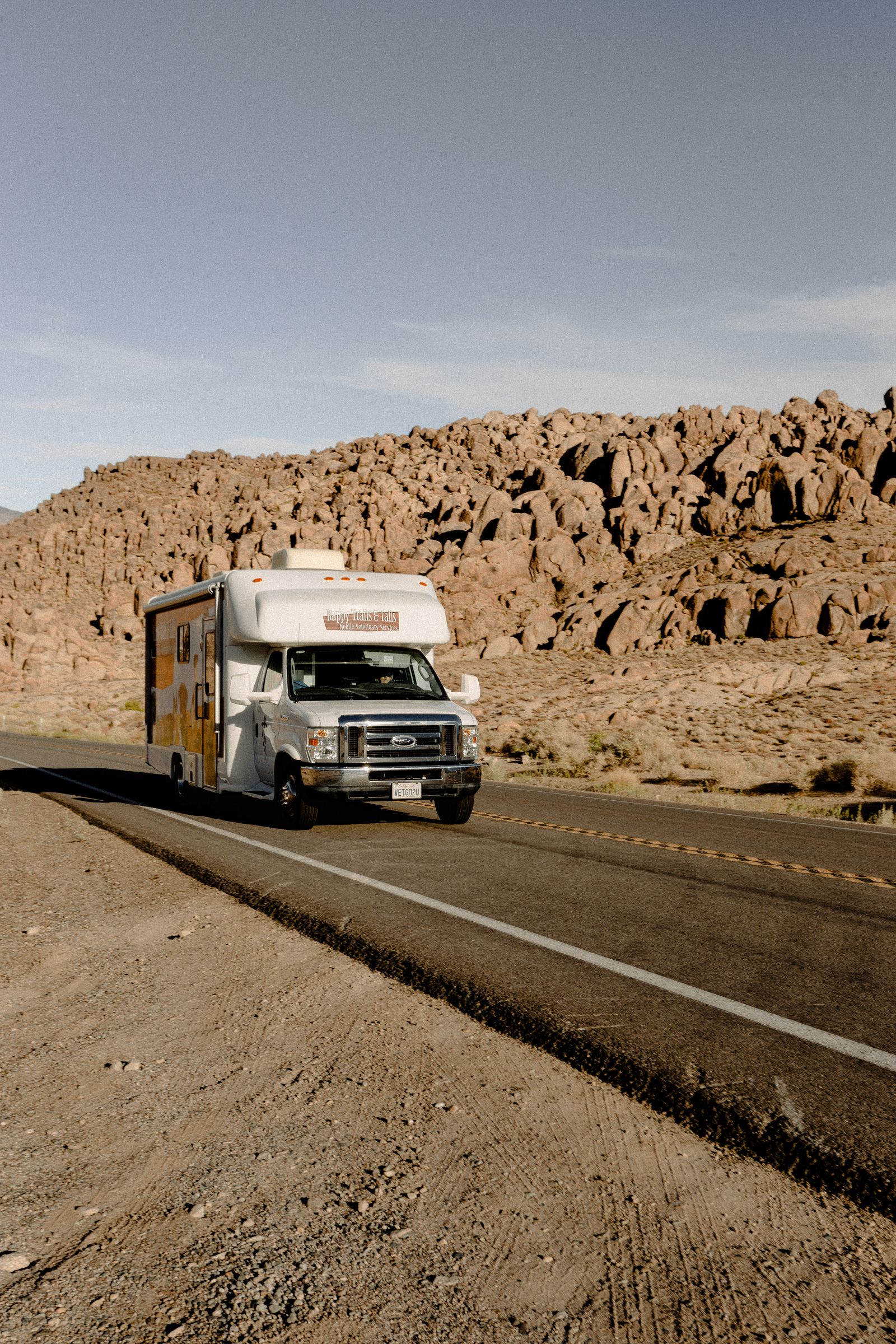
The nearest town with a service truck
If Your RV Quits Near Death Valley, Pahrump Is the Short Answer
Death Valley National Park is the largest national park in the lower forty-eight, and almost none of it has a repair shop. On the Nevada side, the practical service base is Pahrump: roughly an hour and a change from the valley floor, about half an hour from Death Valley Junction, and the last place on that side of the map with a real supply of parts, fuel, groceries, and people who work on RVs.
That geography is the whole reason this page exists. A rig that breaks down between Pahrump and the park is not close to anything else. Las Vegas is on the far side of a mountain pass. The California towns west of the park are further still. So before you spend an afternoon calling numbers that ring in another county, here is an honest account of what help actually looks like out there — and what it cannot be.
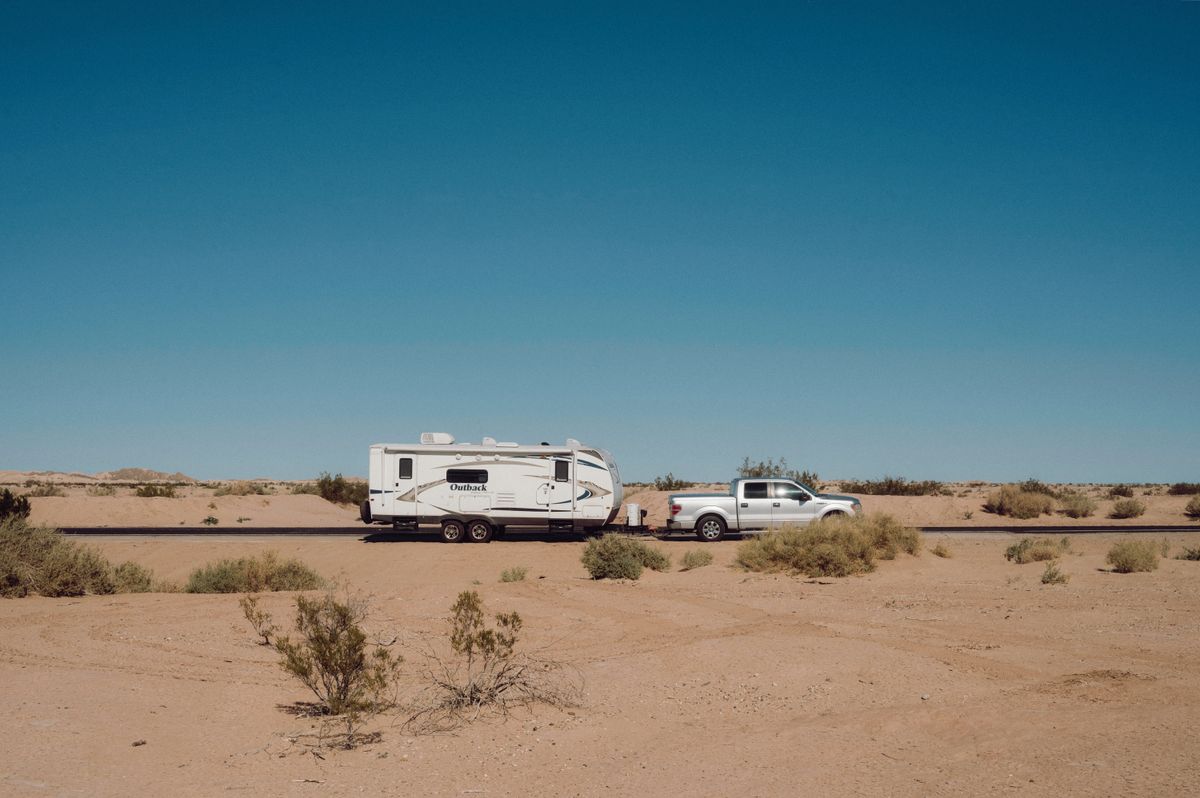
If it is hot, safety comes before the repair — every time. Death Valley regularly runs well past 120°F in summer, and the ground and vehicle interiors get hotter still. In those conditions a stopped RV is a survival situation before it is a mechanical one. Stay with the vehicle, get into shade, drink water, and call 911 or a park ranger rather than a repair number if anyone is overheating, out of water, or in a rig with no cooling. Do not walk out for help. Vehicles get found; people walking in that heat often do not.
First things first
The Five Minutes After You Stop
- Get off the road properly. Park-area shoulders are narrow and soft, and traffic moves fast between viewpoints. Flat ground, hazards on, triangles out well behind you.
- Check your water before anything else. Count the gallons on board and ration from that number, not from how long you assume the wait will be. Assume the wait is longer.
- Find your signal, then use it. Coverage in the park is thin and patchy — the Furnace Creek area is the most reliable spot, Stovepipe Wells and the sand dunes have effectively none, Badwater is hit-or-miss, and canyon roads have nothing at all. If you have a satellite messenger or a phone with satellite SOS, this is exactly what it was bought for.
- Text before you call. On one weak bar a text often goes through when a call will not. Send your location, your rig type, and what failed — ideally with a photo. It also gives a technician a head start on parts.
- Fix your position. Road name plus mile marker, or GPS coordinates from your phone's map app. "Somewhere past the dunes" is not a location anyone can drive to.
What actually fails out here
The Park Finds Every Weak Component You Own
Breakdown patterns in this corridor are not random. The park sits below sea level at its lowest point, the climbs in and out are long, and there is no shade anywhere. Rigs arrive already hot and leave hotter.
- Cooling that gives up on the grade. Rooftop air conditioners are asked for everything they have on the climbs, and a marginal capacitor or a dust-packed coil picks that moment to quit.
- Absorption refrigerators that stop absorbing. These have a real upper ambient limit, and the park exceeds it routinely. A fridge that quit in the park is often not broken so much as overwhelmed — but the ones that are broken need diagnosis before your food does the deciding.
- Batteries cooked by a week of dry camping. Heat shortens lead-acid life dramatically, and a bank that seemed fine in April will not hold a night's furnace load in a park campground. Battery and charging systems are among the most common corridor calls.
- Generators that sat too long. If the rig has been parked and the generator has old fuel in it, the park is a poor place to find that out. See the generator page for why.
- Tires. The number-one trip-ender on this corridor, and honestly not mobile RV repair work at all — that is a tow-and-tire-service call. Hot pavement plus underinflation plus old rubber is the classic combination, and it is almost entirely preventable at home with a gauge.
- Engines, transmissions, and overheating. Also outside what a mobile RV technician does. Those are chassis problems, and the honest answer is a tow.
The honest limits
What a Mobile RV Technician Can and Cannot Do Out There
Here is the part other sites skip. Mobile RV repair covers the living systems of the coach — cooling, refrigeration, water, power, roofs, slides, awnings. It does not cover engines, transmissions, axles, or tires. If your problem is in the chassis, the fastest real help is a tow operator, and you should be told that on the phone instead of after a long drive.
Distance is the second limit. Calls deep inside the park are case-by-case: it is a long unsupported run into country with almost no signal, and by the time a truck reaches you, some problems are better solved by towing out to where parts and shade exist. Service in remote areas carries a distance component in the fee, and it can carry a delay — sometimes a day, occasionally longer in a busy winter week. Anyone who promises you a fast arrival deep in Death Valley without knowing the day's schedule is guessing, and a guess is worth nothing when you are sitting on a shoulder.
What is genuinely realistic: service at the corridor parks and the Nevada gateway towns, work on a rig that has limped back out to Beatty, Amargosa Valley, or Longstreet, and full service once you are back in the Pahrump valley or anywhere else in southern Nye County. That covers most park-bound RV traffic, because most of it stages on the Nevada side going in and coming out.
Where to call from
Make the Call at the First Bar of Signal
The practical advice is simple: the moment your phone finds signal on the way out, stop and make the call. That will usually be the Furnace Creek area inside the park, or the highway approaches toward Death Valley Junction, Amargosa Valley, or Beatty. Describe the rig, the symptom, and exactly where you are, and you will get a straight read on whether this is a mobile job, a tow, or something you can nurse into town safely.
Save the number before you lose signal, not after. The worst possible time to search for a mobile RV technician is standing beside a stalled rig holding a phone toward the sky.
Prevention beats rescue
The Checkup That Keeps You Off This Page
Almost every corridor breakdown was visible before the trip. A pre-trip once-over while you are still parked in Pahrump or at a corridor park costs a fraction of a remote service call and takes about an hour: air conditioning tested at load, refrigerator cooling verified, battery capacity actually measured rather than guessed at, generator started and run under load, tire pressures and date codes checked, and a look at whatever the rig has been doing that you have been ignoring.
Then pack for the country you are entering. Far more water than your plans require. A real tire gauge. Downloaded offline maps, because navigation dies with your signal. A full tank before you go in — fuel inside the park is limited and famously expensive. And a plan for what you will do if the rig stops, made while you are comfortable rather than while you are hot.
Quick answers
Death Valley Breakdown FAQs
Will a technician actually drive into the park to me?
It is case-by-case and depends on where you are, what failed, and the day's schedule. A long run into an area with no signal is a real commitment, and for some problems a tow to town genuinely serves you better. Call from your first signal and you will get an honest read rather than a maybe.
How fast can someone get to me?
No honest answer exists without knowing the day. Remote calls are scheduled as dedicated trips, so timing depends on the existing calendar and the distance. Emergencies — no cooling in heat, an active leak, anyone medically at risk — get first claim on the schedule. What you will not get here is an invented response time.
Is there any RV repair inside Death Valley or in the gateway towns?
Essentially no dedicated RV service infrastructure exists in the park or in the small towns around it. Fuel and basic auto help exist at a few points inside the park; RV systems work does not. That is precisely why a Pahrump-based mobile technician covers this corridor.
My phone has no signal. What are my options?
Satellite messaging or satellite SOS if your phone or device supports it. Otherwise, stay with the rig and flag down passing traffic — on main park roads in season, help comes by regularly. Rangers patrol the park and can relay. Do not set out walking, especially in warm weather.
Does a remote call cost more?
Yes, and you will hear the numbers before anything is booked. Distance is part of the fee, because the drive is real. If the problem can wait a day, saying so sometimes allows the trip to be bundled with other corridor work, which trims the distance charge. If it cannot wait, say that instead.
Stalled Near the Park? Start With the Call
Tell us your location, your rig, and what quit. You will get a straight answer about whether this is a mobile repair or a tow.